About HALAR Anti Static Coating
Halar Anti Static Coating
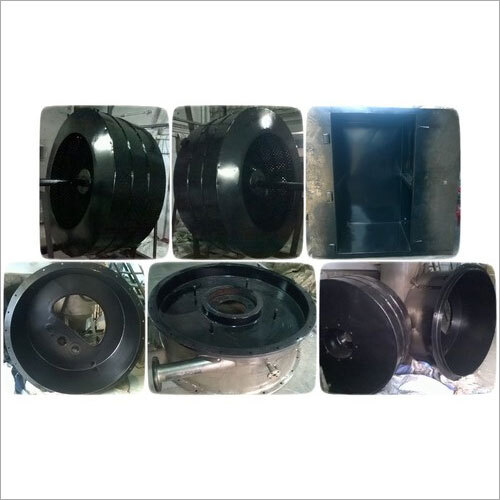
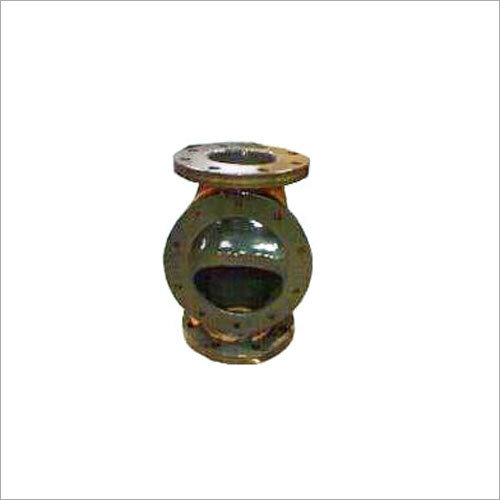
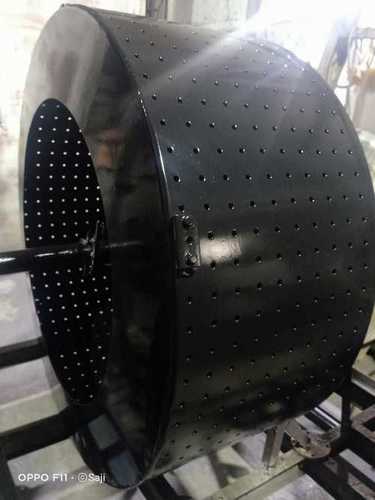
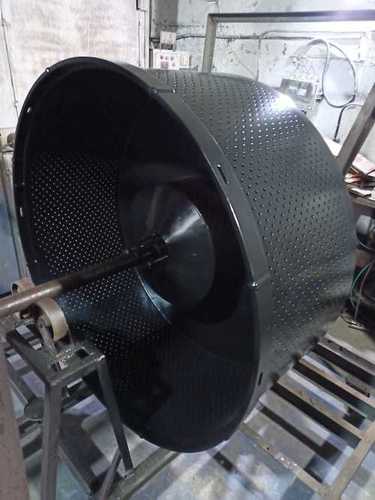
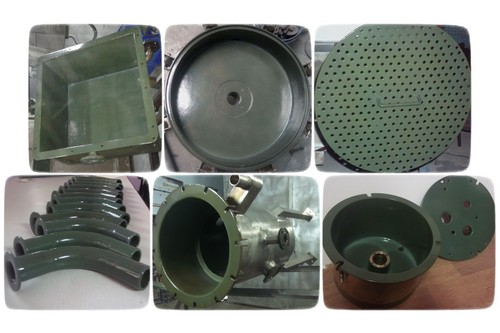
With our excellent coating services, Polymech Engineering helps you to get superior protection and performance for your parts. We provide effective Halar Anti Static Coating based on your production requirements and operating environment. Also, we use latest application technology and finest inputs to create optimal coating works. We meet perfect finish and performance for your components and that too at an affordable price.
We provide Halar coatings for chemical process equipment for handling corrosive chemical as well as dissipating undesirable static charge. Undesirable static charges are generated during the handling and storing of solvents or during handling or generation of fine organic powders. There is a potential risk of explosive vapor or air mixture or powder. If any accidental sparks due to the friction it will lead to fire and explosion. This coating is conductive throughout its layers and dissipates static charges in less than 0.1 seconds.
Halar XPH 832
Halar XPH 832 is a black, semi crystalline melt processable fluorinated resin that is used in full compliance with the federal food, drug and cosmetic act. It is designed for Electrostatic Powder Coatings and is particularly recommended for use as an antistatic coating in the protection and anti corrosion applications.
Main Features
- Black color coating
- Antistatic properties
- Compliance to food contact
- Good chemical resistance
- Good thermal properties
- Optimum permeation resistance
- Outstanding flame resistance
- Good surface finish
- Physical
- Melt Mass flow rate 12 g / 10 min
- Melting temp 227 degree C
Superior Chemical & Anti-Static ProtectionThanks to its exceptional resistance to a range of chemicals and outstanding anti-static capabilities, HALAR (ECTFE) Anti Static Coating is well-suited for environments that require both chemical durability and electrostatic discharge control. The smooth, glossy finish enhances both protection and aesthetics.
Efficient Application & CompatibilityHALAR coating is applied through a controlled spray process, suitable for a variety of metal substrates. Post-application, thermal curing ensures a durable bond. This method enables reliable coverage for sensitive industrial surfaces and equipment operating in challenging conditions.
FAQs of HALAR Anti Static Coating:
Q: How is HALAR Anti Static Coating applied to metal surfaces?
A: HALAR Anti Static Coating is applied using a spray coating technique which ensures even coverage over the entire metal surface. After spraying, the coating is thermally cured to achieve optimal durability and finish.
Q: What benefits does HALAR (ECTFE) offer in industrial environments?
A: HALAR coating provides excellent chemical resistance against acids, solvents, and bases, and maintains stable anti-static performance. The smooth glossy finish reduces dust accumulation, enhances equipment longevity, and minimizes electrostatic risks.
Q: When should HALAR Anti Static Coating be considered for use?
A: This coating is ideal for projects where both chemical protection and electrostatic discharge prevention are necessary, particularly in industries handling corrosive substances or operating sensitive electronic equipment up to 150C.
Q: Where is HALAR Anti Static Coating service available in India?
A: Service providers in India offer HALAR Anti Static Coating for various industries that require specialized metal protection. It is suitable for installation on facilities, equipment, and components using metals like mild steel, stainless steel, and aluminum.
Q: What is the process for HALAR coating from application to cure?
A: The process begins with preparing the metal substrate, followed by the spray application of HALAR (ECTFE) coating. This is concluded with thermal curing, which binds the coating to the substrate and achieves a glossy, protective finish.
Q: How does HALAR Anti Static Coating help control static electricity?
A: The coating maintains surface resistivity between 10^6 and 10^9 Ohm/sq, which effectively dissipates static charges. This reduces the risk of electrostatic discharge, protecting equipment and enhancing operational safety.






 Send Inquiry


 Send Inquiry
 Send Inquiry
 Send SMS
 Call Me Free


